
Best Fire Safety Equipment Supplier in Bangladesh: A Complete Guide to Fire Safety Protection
Fire can turn a small incident into a major emergency within minutes. For factories, offices, commercial buildings, warehouses, hospitals, shopping malls, educational institutions, residential projects, and industrial facilities, having the right fire protection equipment is an essential part of protecting people, property, and business continuity.
Choosing the Best Fire Safety Equipment Supplier in Bangladesh is therefore not simply about finding the lowest price. A reliable supplier should be able to provide suitable equipment, dependable products, technical guidance, installation support, testing, maintenance, and documentation according to the requirements of the particular facility.
Bangladesh's Fire Service and Civil Defense maintains official fire-prevention and firefighting regulations, including the Fire Prevention and Extinguishing Rules 2014 and Fire Service Rules 1961. Internationally recognized NFPA standards also cover major areas such as portable extinguishers, sprinklers, standpipes, fire pumps, fire alarms, and clean-agent systems.
What Is Fire Safety Equipment?
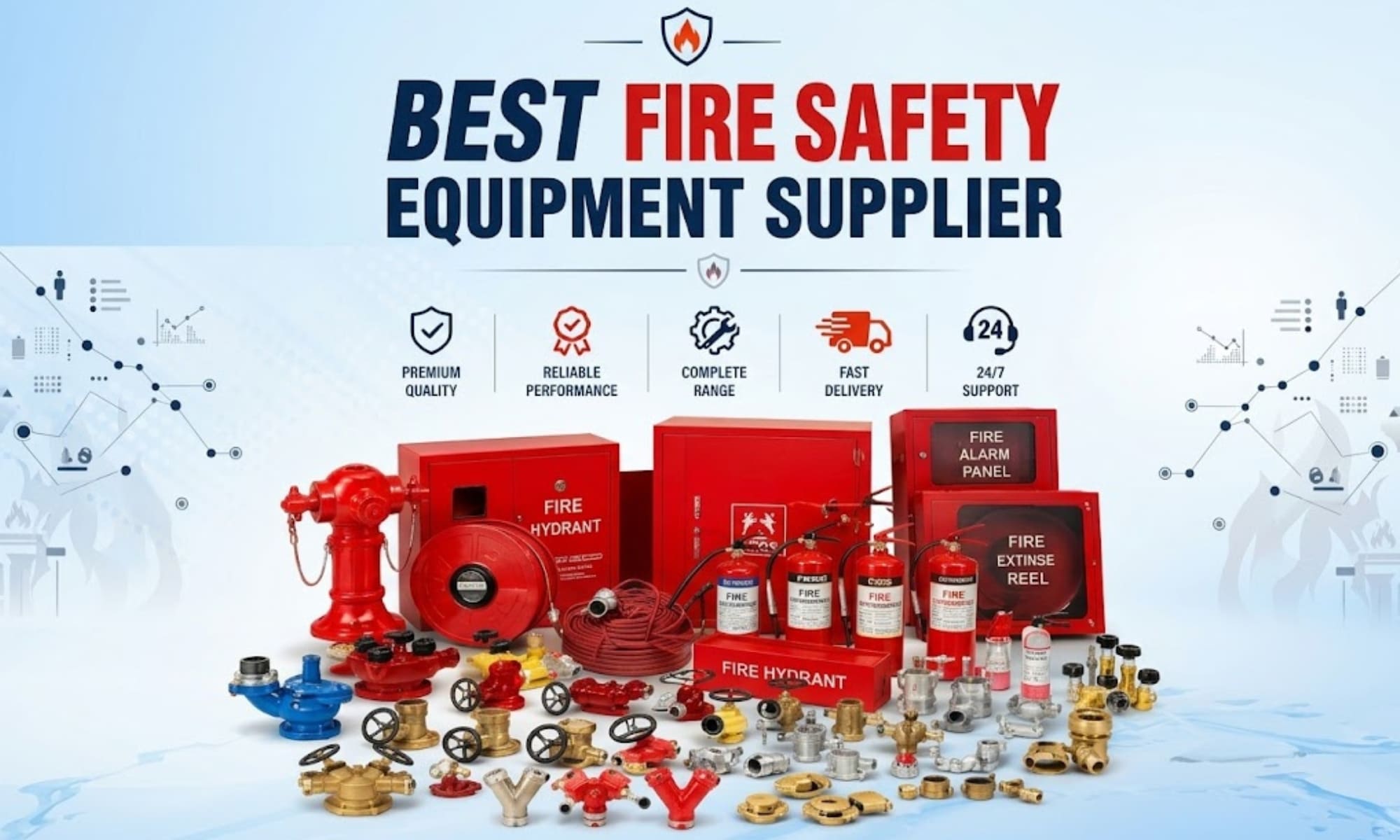
Fire Safety Equipment refers to products and systems designed to detect, control, suppress, extinguish, or help people safely respond to a fire emergency.
Depending on the building type and fire risk, a complete protection arrangement can include:
- Fire Extinguishers
- Fire Alarm Systems
- Smoke Detectors
- Heat Detectors
- Flame Detectors
- Manual Call Points
- Fire Alarm Sounders and Flashers
- Fire Hydrant Systems
- Fire Hose Pipes and Hose Reels
- Fire Sprinkler Systems
- Fire Pumps
- Fire Water Tanks
- Fire Valves
- Breeching Inlets
- Fire Doors
- Emergency Lighting
- Fire Safety Signage
- Clean-Agent Suppression Systems
- Foam Firefighting Systems
- Gas Suppression Systems
- Fire Fighting Accessories
- Personal Protective Equipment
The correct selection depends on occupancy, building configuration, fire load, potential hazards, and applicable codes rather than simply installing every available product.
Why Choosing the Best Fire Safety Equipment Supplier Matters
A fire protection system is only useful when its components are appropriate, correctly installed, and maintained in working condition.
The Best Fire Safety Equipment Supplier should therefore provide more than a product catalogue. A capable supplier can help customers understand their risks and select equipment appropriate for their application.
1. Genuine and Reliable Products
Fire equipment must perform during an emergency. A dependable Fire Safety Equipment Supplier should clearly communicate product specifications, origin, certifications where applicable, ratings, and warranty information.
2. Correct Equipment Selection
Different fire hazards require different extinguishing methods. For example, equipment suitable for ordinary combustible materials may not be appropriate for energized electrical equipment or flammable-liquid hazards.
3. Technical Support
A supplier with technical expertise can assist with equipment selection, system design, installation, commissioning, inspection, and maintenance.
4. Installation Capability
For fixed systems such as fire alarms, hydrants, sprinklers, and fire pumps, installation quality can directly affect system performance. A supplier offering both equipment and engineering support can provide a more coordinated solution.
5. After-Sales Service
Fire protection is not a one-time purchase.
Fire Safety Equipment List for Buildings and Industrial Facilities
A practical fire safety equipment list varies according to the facility. However, common categories include the following.
Portable Fire Extinguishers
Portable extinguishers provide first-response firefighting capability. Common types include:
- ABC Dry Chemical Powder Extinguisher
- CO₂ Fire Extinguisher
- Foam Fire Extinguisher
- Water Fire Extinguisher
- Wet Chemical Fire Extinguisher
NFPA 10 is specifically dedicated to portable fire extinguishers, and the current NFPA publication catalogue lists a 2026 edition.
Fire Alarm Systems
Typical components include:
- Conventional Fire Alarm Panels
- Addressable Fire Alarm Panels
- Smoke Detectors
- Heat Detectors
- Flame Detectors
- Manual Call Points
- Sounders
- Flashers
- Input / Output Modules
- Monitor Modules
- Control Modules
Fire Hydrant Equipment
Hydrant systems provide firefighting water through strategically positioned outlets.
Common components include:
- Fire Hydrant Valves
- Fire Hose Pipes
- Fire Hose Reels
- Landing Valves
- Breeching Inlets
- Hose Cabinets
- Fire Hydrant Accessories
- Fire Water Storage Tanks
NFPA 14 addresses standpipe and hose systems.
Fire Sprinkler Systems
Automatic sprinklers can provide localized fire control or suppression when their heat-sensitive elements activate.
A sprinkler installation normally involves appropriately designed piping, water supply, control valves, alarms, and sprinkler heads. NFPA 13 is the principal NFPA installation standard for sprinkler systems.
Fire Pump Systems
Fire pumps provide the required water pressure and flow for water-based firefighting systems.
Depending on the project, a fire pump arrangement may include:
- Main Fire Pump
- Diesel Fire Pump
- Electric Fire Pump
- Jockey Pump
- Fire Pump Controller
- Pressure Gauges
- Test Header
- Fire Pump Accessories
NFPA 20 addresses stationary fire pumps for fire protection.
Fire Doors and Passive Protection
Fire protection is not limited to active firefighting systems. Fire-rated doors and other passive protection measures can help restrict fire and smoke movement and support safe evacuation.
Fire Safety Equipment Requirements in Bangladesh
The fire safety equipment requirements of a project should be determined from its occupancy, size, height, layout, construction characteristics, fire hazards, and applicable regulations.
Bangladesh's building fire-protection provisions have historically specified different active protection arrangements according to occupancy and building characteristics. For example, published BNBC fire-protection provisions identify combinations of portable extinguishers, hydrants, manual alarms, automatic alarms, and other systems depending on building conditions.
Therefore, there is no universal equipment package that is suitable for every building.
A proper assessment should consider:
- Building occupancy
- Floor area
- Building height
- Number of occupants
- Escape routes
- Fire load
- Electrical hazards
- Flammable materials
- Storage arrangements
- Industrial processes
- Kitchen hazards
- Server/data equipment
- Existing fire protection systems
- Water availability
- Emergency response requirements
For projects requiring regulatory approval, the applicable requirements should be verified with the relevant authorities and project professionals.
Understanding Fire Safety Equipment Standards
Quality and compliance are major considerations when purchasing fire protection equipment.
The term fire safety equipment standards can refer to national regulations, building codes, product standards, installation standards, testing requirements, and certification schemes.
Important international NFPA references include:
| Equipment/System | Relevant NFPA Reference |
| Portable Fire Extinguishers | NFPA 10 |
| Foam Systems | NFPA 11 |
| CO₂ Systems | NFPA 12 |
| Sprinkler Systems | NFPA 13 |
| Standpipe & Hose Systems | NFPA 14 |
| Fire Pumps | NFPA 20 |
| Fire Water Tanks | NFPA 22 |
| Water-Based System ITM | NFPA 25 |
| Fire Alarm & Signaling | NFPA 72 |
| Fire Doors | NFPA 80 |
| Clean-Agent Systems | NFPA 2001 |
These references are part of the broader NFPA standards framework; the applicable edition and requirements should always be confirmed for the specific project.
How to Choose the Best Fire Safety Equipment Supplier in BD
Searching for the Best Fire Safety Equipment Supplier in BD can produce many options. Instead of selecting a supplier based only on price, evaluate the following factors.
Product Range
Choose a Safety Equipment Supplier capable of supplying the equipment required for your project rather than relying on multiple unrelated vendors for every component.
Product Documentation
Ask for relevant:
- Technical datasheets
- Product specifications
- Test certificates
- Certification information
- Warranty documents
- Installation instructions
- Maintenance recommendations
Engineering Knowledge
A supplier should understand how individual components work together as a complete fire protection system.
Installation & Commissioning
For fixed systems, installation and commissioning support can be just as important as the equipment itself.
Maintenance Support
Look for suppliers that can support inspection, testing, servicing, refilling, replacement, and troubleshooting after installation.
Project Experience
Experience with commercial buildings, factories, warehouses, hospitals, residential projects, data centers, and other facilities can indicate whether the supplier understands different fire risks.
Fire Fighting Equipment and Supplies for Different Applications
Fire fighting equipment and supplies should be selected according to the specific hazards of each location.
Commercial Buildings
- Fire Extinguishers
- Fire Alarm Systems
- Emergency Lighting
- Fire Doors
- Hydrant Systems
- Fire Hose Reels
- Fire Safety Signage
Factories
- Industrial Fire Extinguishers
- Fire Alarm Systems
- Hydrant & Sprinkler Systems
- Fire Pumps
- Fire Water Tanks
- Specialized Suppression Systems
- Fire Hose Equipment
Warehouses
- Portable Extinguishers
- Automatic Sprinklers
- Hydrant Systems
- Fire Alarm Systems
- Smoke Detection
- Fire Water Supply
Data Centers
- Early Detection
- Addressable Fire Alarm
- Clean-Agent Suppression
- Appropriate Portable Extinguishers
- Emergency Shutdown/Control Interfaces
Commercial Kitchens
- Wet Chemical Suppression
- Suitable Portable Extinguishers
- Fire Alarm and Detection
- Kitchen Hood Protection
The equipment should be selected after evaluating the actual fire hazards rather than applying the same configuration to every facility.
Fire Safety Equipment Suppliers in Bangladesh: What to Look For
There are many fire safety equipment suppliers in Bangladesh serving different segments of the market. When comparing fire safety equipment suppliers, customers should examine both product quality and technical capability.
A dependable fire and safety equipment supplier should ideally be able to provide:
Supply → Technical Consultation → Design → Installation → Testing → Commissioning → Maintenance
This integrated approach can reduce compatibility problems between different components and make ongoing maintenance easier.
Customers should also be cautious about purchasing equipment solely because it is inexpensive. A low initial purchase price can become expensive if products have poor reliability, inadequate documentation, limited spare parts, or weak after-sales support.
What About Fire Safety Equipment Manufacturers and Suppliers Association of Bangladesh?
People searching online may also use phrases such as fire safety equipment manufacturers and suppliers association of Bangladesh when researching the local industry.
However, association membership or industry affiliation alone should not be treated as proof that a particular product is appropriate for a specific project. Buyers should independently verify the supplier's business credentials, product documentation, technical capability, relevant certifications, warranty terms, and service capacity.
The focus should always remain on suitable, reliable, properly documented fire protection equipment and competent installation.
Why Professional Fire Safety Planning Is Important
Buying individual products is not the same as creating a fire protection system.
For example, installing fire extinguishers without considering travel distance, hazard classification, mounting, inspection, and accessibility may leave important areas inadequately protected.
Likewise, a sprinkler system requires proper hydraulic design, water supply, piping, valves, alarm arrangements, testing, and maintenance. Fire alarm systems require appropriate detector selection, coverage, notification, control equipment, wiring, testing, and ongoing maintenance.
NFPA's standards framework includes separate standards for installation and inspection/testing/maintenance, illustrating why fire protection needs to be treated as an ongoing system rather than a one-time equipment purchase.
Best Fire Safety Equipment: Quality + Correct Application
The Best Fire Safety Equipment is not necessarily the most expensive product or the product with the longest feature list.
The better question is:
Is the equipment suitable for the identified hazard, correctly specified, properly installed, tested, maintained, and supported?
A high-quality fire extinguisher in the wrong location is not an effective protection strategy. Similarly, a sophisticated fire alarm system cannot provide its intended protection if detectors are incorrectly selected or the system is not properly maintained.
This is why selecting the right Safety Equipment Supplier is an important part of a complete fire safety strategy.
Fire Safety Equipment Maintenance
Even high-quality equipment can become unreliable without proper maintenance.
A fire protection maintenance program may include:
- Visual Inspection
- Fire Extinguisher Inspection
- Extinguisher Refilling
- Fire Alarm Testing
- Detector Testing
- Sounder Testing
- Fire Pump Testing
- Hydrant System Inspection
- Sprinkler System Inspection
- Valve Inspection
- Emergency Lighting Testing
- Fire Door Inspection
- System Documentation
- Corrective Maintenance
For water-based systems, NFPA 25 provides inspection, testing, and maintenance guidance, while NFPA 72 addresses testing and maintenance considerations for fire alarm systems.
Why Choose a Reliable Fire Safety Equipment Supplier?
When searching for safety equipment suppliers, consider a company that can combine product availability with technical expertise and long-term support.
A reliable supplier should offer:
- Quality Fire Safety Products
- Appropriate Product Selection
- Technical Consultation
- Fire Protection System Design
- Professional Installation
- Testing & Commissioning
- Preventive Maintenance
- Replacement Parts
- After-Sales Support
- Project-Based Solutions
- Clear Product Documentation
For Bangladesh's commercial and industrial sectors, this combination can provide significantly more value than simply purchasing standalone equipment.
Conclusion
Finding the Best Fire Safety Equipment Supplier in Bangladesh requires more than comparing prices. Fire protection is a life-safety function, so equipment quality, correct application, standards, installation, testing, maintenance, and technical support all deserve careful consideration.
Whether you need fire fighting equipment, fire extinguishers, fire alarm systems, hydrant systems, sprinklers, fire pumps, fire doors, suppression systems, or other fire fighting equipment and supplies, begin with a proper assessment of the building's hazards and applicable requirements.
The right Fire Safety Equipment Supplier should be capable of helping you move from risk assessment to equipment selection, installation, commissioning, and long-term maintenance—creating a more dependable fire protection strategy for your property and its occupants.